
November 12, 2025 All day
Theme: Fostering Transparent, Ethical & Accountable Basic Education Governance
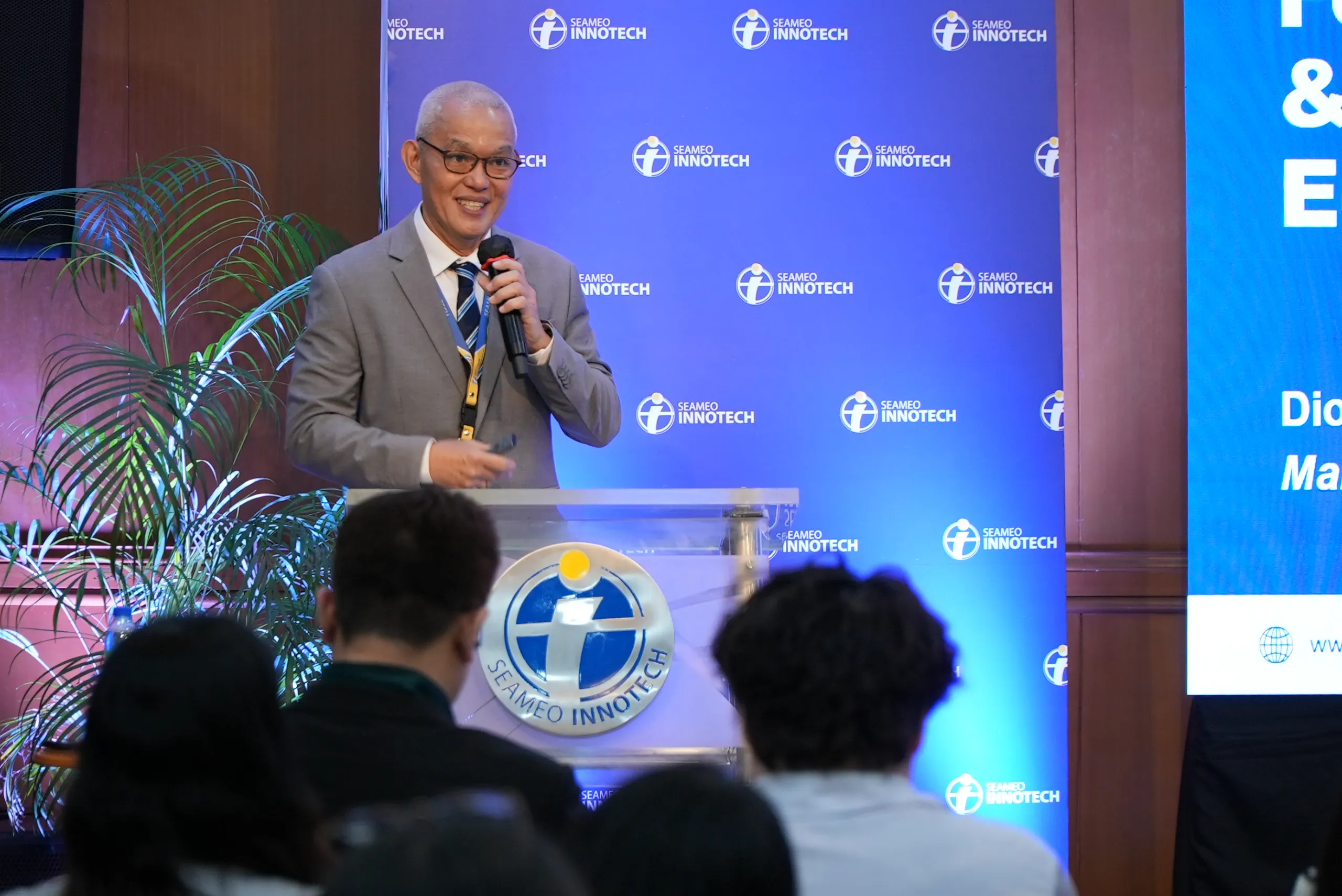
Speaker: Diosdado M. San Antonio
The INNOTECH Seminar Series on Education, Innovation and Technology held on November 12, 2025, featured Diosdado M. San Antonio, former Manager of SEAMEO INNOTECH’s Educational Research and Innovation Office, who discussed how transparency, ethics, and accountability can be translated into concrete leadership and governance practices in basic education. Drawing from his experience in the Department of Education, Mr. San Antonio presented the TEA Governance Advocacy, which promotes Transparency, Ethics, and Accountability as foundations for addressing governance challenges in schools and education offices. At the center of the advocacy is SCOUTERS ROCK, a set of practical actions that includes strengthening merit-based systems, building productive partnerships, opening communication channels, upholding standards of conduct for public officials, strengthening instructional supervision, expanding access to quality education, promoting research-based practices, advancing School-Based Management, ensuring accurate financial reporting, optimizing ICT, conserving resources, and maintaining safe and environmentally responsible schools and offices.
Mr. San Antonio emphasized that fostering transparent, ethical, and accountable governance requires more than establishing systems and policies; it also depends on leadership practices that build trust, encourage participation, and model the values expected throughout the organization. He identified limited resources, resistance to change, deeply rooted organizational traditions, conflicting interests, external pressures, and inconsistent enforcement of accountability as challenges to sustaining TEA Governance. To address these, he highlighted mentoring and training, clear guidelines and mechanisms, recognition of leaders and schools that demonstrate TEA values, strong communication, integration of TEA Governance into policies and performance systems, and strengthened partnerships. He further presented leadership approaches centered on being Proactive, Results-Oriented, Intelligent, Network-building, Credible, and Empowering (PRINCE) and creating autonomy through trust and dialogue. His presentation underscored that meaningful governance reform ultimately requires changing organizational culture by turning education stakeholders from passive participants into committed advocates of transparency, ethical conduct, accountability, and sustained improvement.
Video Presentation
Resources
Access the Full Presentation
