
September 3, 2026 @ 2:30 pm – 4:30 pm
Theme: How Much Are Skills Worth? Skills, Tasks, and the Misallocation of Filipino Talent
Speaker: Dr. Michael Ralph Abrigo
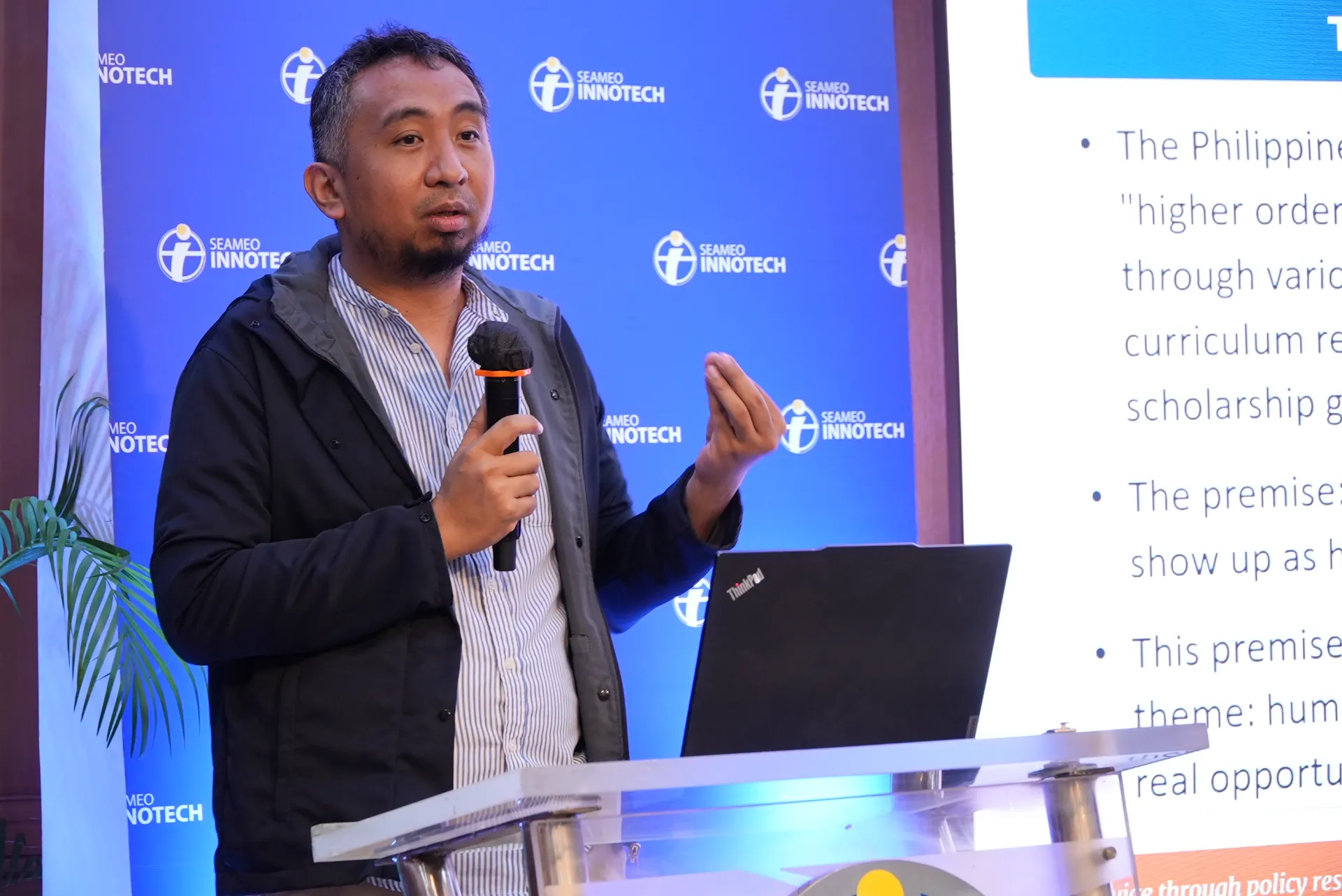
SEAMEO INNOTECH convened the Seminar Series on Education, Innovation, and Technology on 3 September 2026, featuring Dr. Michael Ralph Abrigo, Senior Research Fellow at the Philippine Institute for Development Studies (PIDS). His presentation, “How Much Are Skills Worth? Skills, Tasks, and the Misallocation of Filipino Talent,” examined how the skills demanded by work in the Philippines have evolved and what happens when workers are unable to fully put their capabilities to productive use.
Drawing on Philippine census and labor force data spanning more than a century, Dr. Abrigo showed how Filipino jobs have shifted from work relying more heavily on physical skills toward occupations requiring greater technical, interpersonal, and transversal skills. Tasks have likewise moved toward more cognitive and non-routine work. However, he noted that the Philippines still has room to move further toward higher-value cognitive occupations, particularly when compared with some regional and aspirational peers.
A central message of the presentation was that developing skills is only part of the challenge. Dr. Abrigo explained that workers may face personal, institutional, cultural, and everyday barriers that make certain skills costly to use. These “skill deployment costs” can influence occupational choices, preventing people from working in roles that fully utilize their capabilities even when those skills have value in the labor market.
The study estimated that the resulting misallocation of Filipino talent could be associated with productivity losses of as much as 9.5 percent of GDP annually. Dr. Abrigo also highlighted differences in the costs of deploying skills, including gender-differentiated barriers affecting the use of technical and transversal skills. These findings point to a broader challenge: investing in education and skills development must be accompanied by conditions that enable people to use what they have learned productively.
During the open forum, Dr. Abrigo further emphasized that addressing talent misallocation extends beyond the education sector alone. While education and training interventions remain important, he noted that barriers to skill use can arise from everyday circumstances, including care responsibilities and transportation, requiring a broader community and policy response. Reducing these barriers can help workers better translate their capabilities into productive employment and economic value.
The session reinforced the connection between education and the world of work in preparing people for a rapidly changing environment. For education systems, the discussion highlighted the importance not only of developing future-ready skills, but also of understanding whether learners will eventually have meaningful opportunities to apply them. As Dr. Abrigo summarized, “Building these skills, investing in getting these skills, having these skills are not enough. We need conditions that allow us to actually use these skills productively in the economy.”
Video Presentation
Resources
Access the Full Presentation
