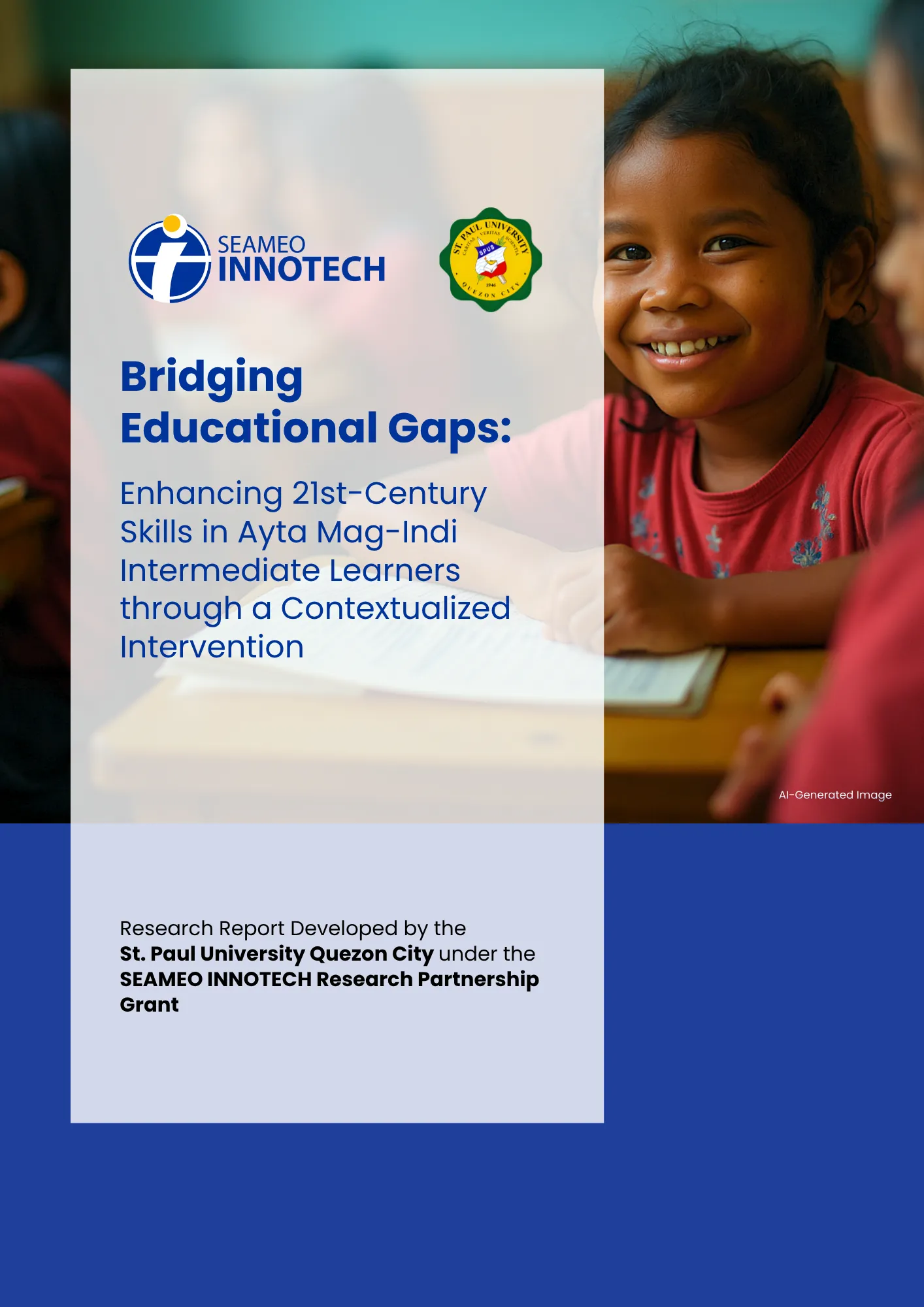
The Ayta Mag-Indi community in Floridablanca, Pampanga faces challenges accessing quality education while striving to preserve their indigenous culture. This study assessed the learners’ knowledge and practice of 21st-century skills and implemented an intervention program to address identified gaps. The project aligns with the United Nations Sustainable Development Goals (SDGs), particularly Goal 4 (Quality Education), Goal 10 (Reduced Inequalities) and Goal 1 (elimination of poverty).
A mixed-methods research approach was used, integrating quantitative data from pre- and post-tests with qualitative insights from a focus group discussion (FGD) with teachers. Forty intermediate learners from Grades 4 to 6 participated in the study. The research process involved four phases: pre-assessment, intervention design, program implementation, and post-assessment. The pre-test findings revealed that digital and technological skills were among the weakest areas, especially for Grade 4 learners with minimal prior computer exposure. However, post-intervention assessments showed significant improvements, particularly among younger students who engaged enthusiastically in digital literacy activities. Critical thinking skills were moderately developed, though reading comprehension challenges hindered deeper analytical engagement. Collaboration and socio-civic engagement were among the strongest skills exhibited by learners, reflecting the collectivist values embedded in their indigenous traditions.
Despite these improvements, several challenges persisted. Key barriers include limited access to digital resources, economic constraints affecting learners’ ability to practice skills outside school, and inconsistent attendance due to livelihood priorities. Teachers also highlighted the need for structured digital literacy training and culturally responsive pedagogy to sustain progress of learners. Given these findings, several recommendations are proposed. Sustained digital literacy programs should be implemented in collaboration with local governments and educational institutions to ensure continued access to technology. Literacy interventions should integrate culturally relevant texts to improve comprehension and critical thinking. In addition, teachers should receive specialized training on integrating 21st-century skills within Indigenous knowledge systems, and infrastructure investments should be made to enhance digital access through community tech hubs and mobile learning centers. Strengthening parental engagement and advocating for policy support will reinforce these efforts.
This study underscores the importance of structured and culturally sensitive educational interventions in equipping Ayta Mag-Indi learners with essential 21st-century skills. While notable progress was made, particularly in digital literacy, sustained efforts and multi-sectoral collaboration are necessary to bridge educational gaps and empower indigenous learners. Ensuring their inclusion in mainstream education while preserving their cultural identity will be vital in fostering long-term educational equity and opportunity.